 By
By Hello everyone. I know I should do more blog posts but I’m mostly super busy with my brokerage, cafe and my family. And of course, sometimes, I’m being lazy as well:)
Before I get into today’s post, I’m happy to announce that I finally got Sengoren.com under my control. I’ve been watching this domain for almost 8 years, the domain expired and I was able to secure the domain via Gname without a contest. The main reason I was watching the domain for that long, the previous owner which was a company focussed on dairy milk and cheese asked around $100K for the domain in 2017 🙂 Anyways, it’s just a small one-page site but it really feels good to own it. Go check Sengoren.com out if you have a minute to spare.
Let’s move on to a more important stuff. When I was working as a Domain Broker at Uniregistry (before GoDaddy acquired the company), I saw a few buyers and sellers doing deals with cryptocurrency (mostly BTC and ETH). The process was handled manually by the Uniregistry payments team at that time. However, those deals were very rare and happened, let’s say, about 10 times in a year.
However, especially after the COVID pandemic, the number of domain transactions with cryptocurrencies significantly increased. That increase led the market and marketplaces to implement crypto payment options and, additionally, crypto escrow services. It’s been quite some time and, even though BTC went from $17K to $100K, the market still hasn’t fully adopted cryptocurrencies. As of today, the biggest and oldest marketplaces do not provide or support payments with crypto.
That said, some newer marketplaces provide crypto payment options via third-party providers. For example, Atom.com, Namecheap.com, and Dynadot.com support payments with crypto, mostly through gateways like BitPay and BTCPay. Even though this helps a lot, there are still problems. Many of those crypto payment companies accept only certain nationalities or jurisdictions to process your KYC and your payment, so availability is still very limited. Crypto is about being decentralized and enabling fast transactions—and, of course, fast payments.
As of today, there are a few options for crypto-escrow payment. One is relatively old and still requires manual processing: Escrow.domains. However, another one is relatively new, almost fully automated and I always prefer: CryptoExchange.com.
I’m going to get a bit deeper into CryptoExchange.com in this post. CryptoExchange.com is a crypto-escrow service that requires no KYC. That’s big! Wherever you are from, whatever passport you have, and wherever you live are not an issue with CryptoExchange.com. What matters most is a secure crypto exchange service, and that’s what CryptoExchange.com provides for anyone who requires it. I’m going to demonstrate an example escrow transaction to show you how straightforward it is. All you need is a registered account with CryptoExchange.com, and the rest is pretty easy to use.
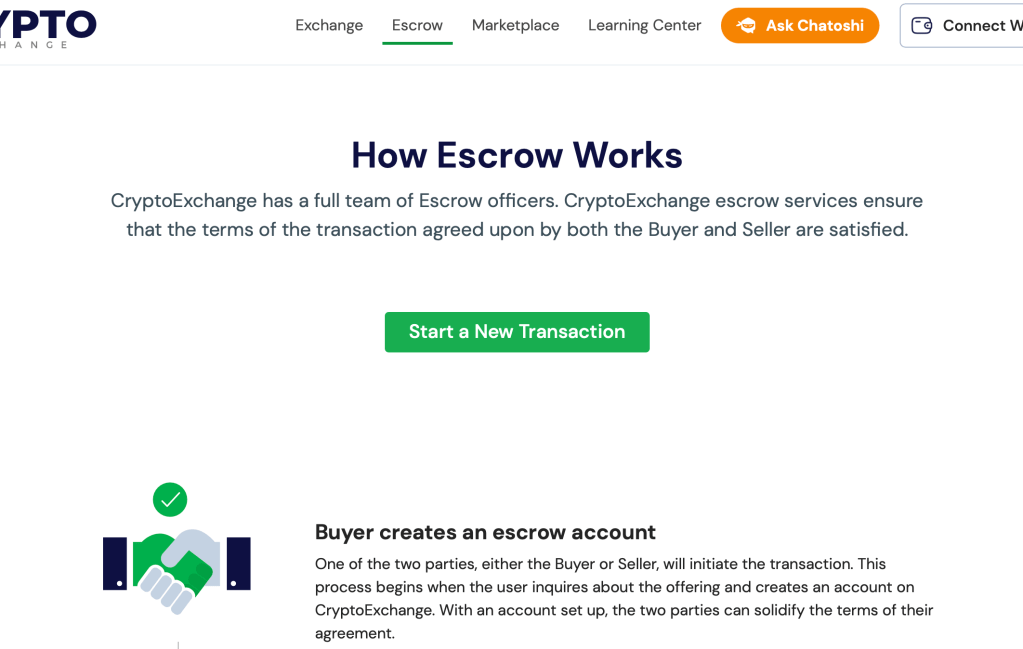
1- Initiate a transaction
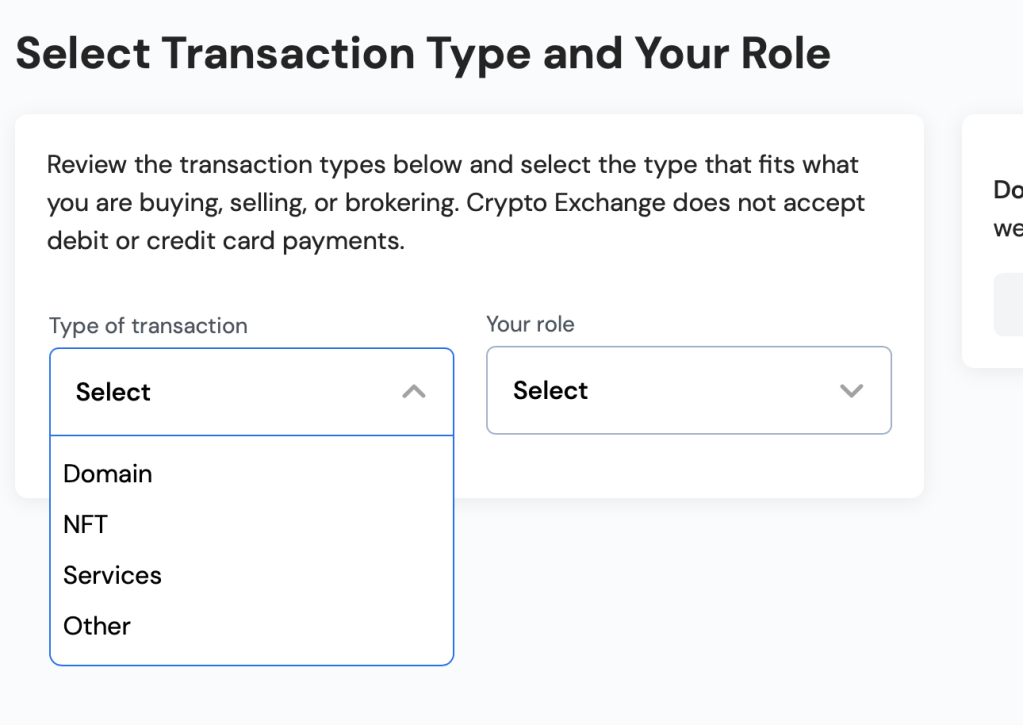
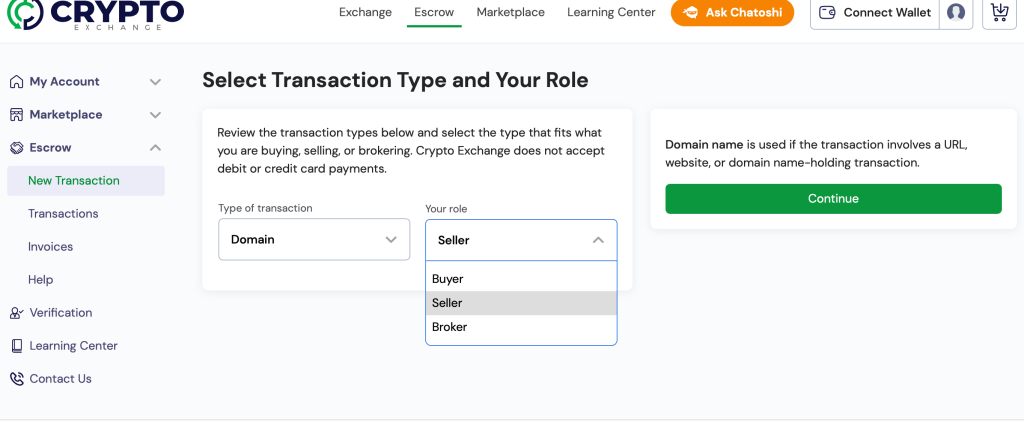
2- Fill the requested information
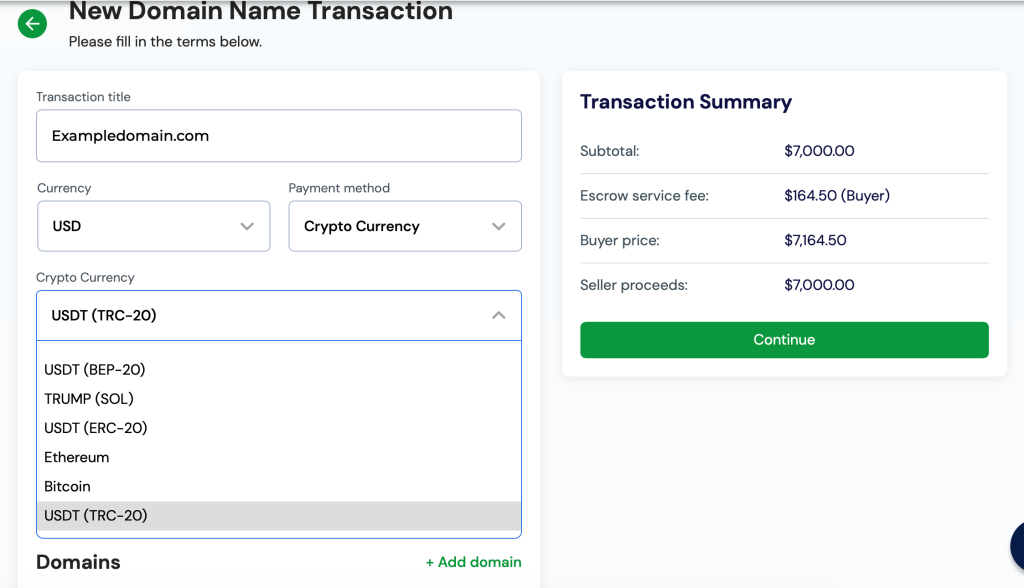
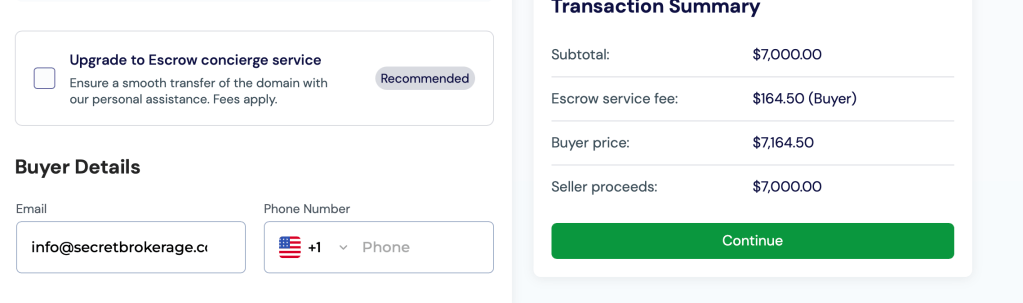
3- Click continue and review the transaction before initiating last time
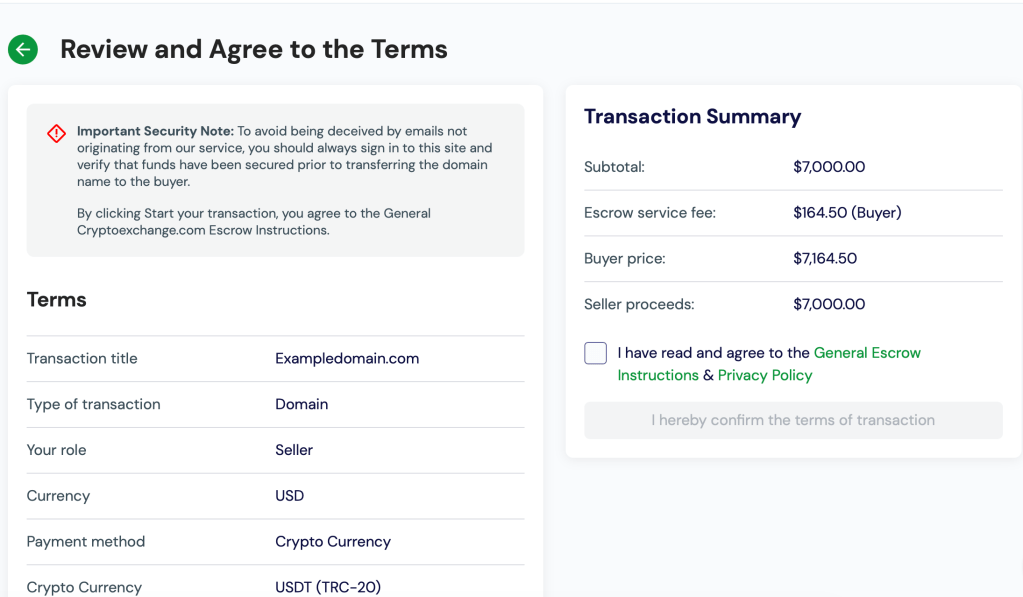
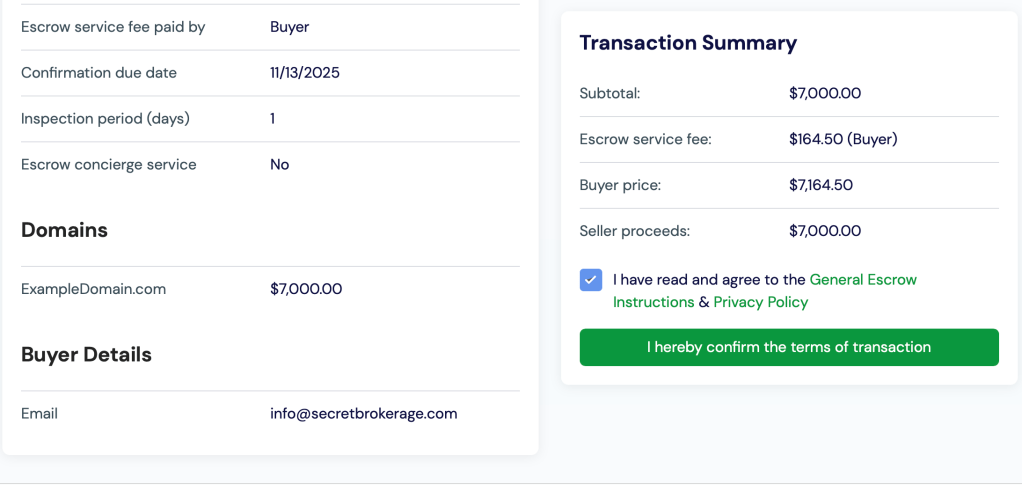
And this is it! It’ll take 2-3 minutes to initiate a crypto escrow with CryptoExchange.com. What happens next?
The counterparty (buyer in this scenario) will receive an email about the transaction being set up and will be asked to create an account to continue. They will then agree to the terms and make the payment with the selected cryptocurrency. Once the payment is secured (usually around an hour or less), the seller will be notified that funds are secured and will continue with the transfer. Once the transfer is done, the seller updates the escrow, the buyer approves (or it’ll get approved in a day based on the inspection period), and it’s done. As a seller, all you have to do is log in to your account and select how you’d like to receive the funds. You can receive them in the transaction default (USDT) in this example, or you can get paid in BTC, ETH, SOL—almost anything you want. Simple and quick.
I’ll answer one of the most-asked questions before you ask. The system creates a new wallet for every single transaction that NO ONE can edit or modify, and no one can withdraw from it. Once payment and transfer are done, payouts will be sent automatically to the seller and/or the broker.
I encourage all sellers, buyers, and brokers (yes, brokers can initiate an escrow transaction as well) to try the platform out once and see how easy and fast it is.


1 comments on “What Are Crypto Escrow Services—and Which One I Mostly Use”